Foundation construction is one of the first major expenses on a project—and one of the first opportunities to save significant time and money.
With traditional foundation methods, costs can quickly add up through excavation, concrete, lumber, insulation, equipment, labor, and multiple trips to the jobsite. Mono Slab® EZ Form is designed to simplify that process. By combining multiple foundation steps into one integrated system, projects can save approximately $5,000 for every 1,000 square feet of structure, depending on project design, location, labor rates, and site conditions.
The savings aren’t tied to just one line item. They come from changing the foundation process itself.
One Foundation System. Fewer Steps.
Traditional foundation construction can require separate excavation, footing, stem wall, insulation, forming, backfilling, and slab operations.
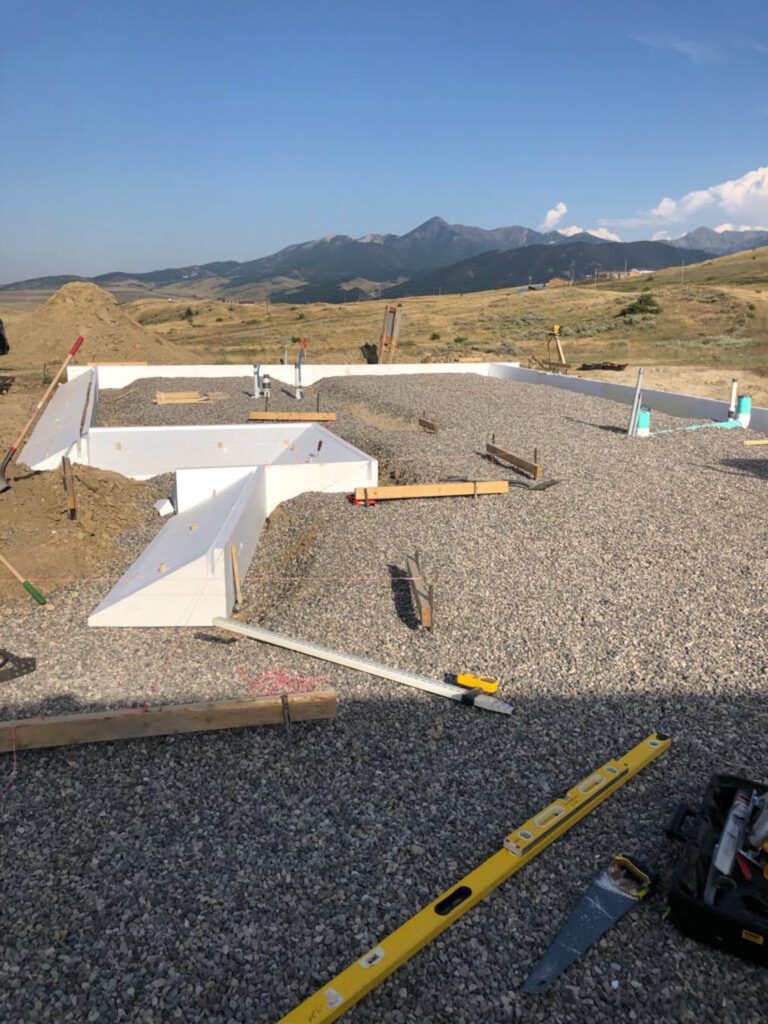
Mono Slab® EZ Form combines footing and slab work into a single-pour foundation system, eliminating the need for separate excavations, footings, and stem walls. The result is a more streamlined installation that can reduce both time and labor.
Mono Slab® can replace traditional footer, stem wall and floor systems, trench-and-cap foundations, and traditional monolithic slabs in residential, commercial, and light-industrial applications.
That means contractors aren’t simply purchasing a different form—they’re changing how the foundation gets built.
Where Does the $5,000 per 1,000 Sq. Ft. Savings Come From?
The exact savings will vary from project to project, but Mono Slab® EZ Form targets several of the largest cost categories in foundation construction.
1. Less Excavation
Deep conventional foundations can require significant excavation, equipment time, material removal, and backfill.
Mono Slab® EZ Form is designed for frost-protected shallow foundation applications, reducing excavation costs by eliminating the need for deep foundations.
Dig less. Move less material. Spend less time in the ground.
2. Lower Labor Costs
Every additional stage of a traditional foundation requires labor.
Traditional forming commonly involves wood forms, stakes, and multiple laborers. Mono Slab® EZ Form uses pre-molded insulated forms to reduce or eliminate much of that conventional forming material while allowing for faster setup. Contractors report savings in both material costs and man-hours.
Instead of repeatedly forming, stripping, insulating, and returning to the same foundation, crews can consolidate more of the work into one process.
3. Reduced Material Costs
Savings aren’t limited to labor.
Mono Slab® EZ Form can reduce the amount of conventional forming material required while also reducing concrete use without compromising strength.
The system’s forms also become a permanent part of the foundation rather than temporary forming material that must later be removed and discarded.
4. Insulation Is Built Into the System
Insulation is another component that traditionally has to be purchased and installed as a separate step.
Mono Slab® EZ Form incorporates EPS (expanded polystyrene) insulation directly into the foundation system. The insulation improves thermal performance, reduces heat loss through the slab edge, and contributes to greater energy efficiency.
In other words, the forming system is doing more than holding concrete in place—it becomes part of the finished, insulated foundation.
5. Faster Foundation Installation Can Keep the Entire Project Moving
Foundation savings aren’t only about material invoices.
Every day spent waiting on separate foundation stages can affect the rest of the construction schedule. Combining footing and slab work into a single-pour system can reduce the number of individual operations required before construction can move forward.
For contractors and production builders, that time can become especially valuable when multiplied across multiple projects.
The Savings Add Up Quickly
At an estimated $5,000 in foundation savings per 1,000 square feet of structure, the potential impact grows with the size and volume of construction:
|
Structure Size |
Approximate Potential Foundation Savings* |
|
1,000 sq. ft. |
$5,000 |
|
1,500 sq. ft. |
$7,500 |
|
2,000 sq. ft. |
$10,000 |
|
2,500 sq. ft. |
$12,500 |
|
3,000 sq. ft. |
$15,000 |
|
5,000 sq. ft. |
$25,000 |
For a builder completing ten 2,000-square-foot structures, that same benchmark represents approximately $100,000 in potential foundation savings.
The bigger opportunity is not simply finding a cheaper individual material. It’s eliminating or reducing costs throughout the entire foundation process.
Save on More Than the Foundation
Mono Slab® EZ Form is designed to provide additional benefits beyond initial construction costs.
As highlighted in the supplied materials, the system is designed for frost-protected shallow foundations, provides more than 51 inches of frost-protection coverage, integrates with radiant-floor heating systems, allows precision leveling to ±½ inch, and eliminates breakaway pieces and associated jobsite waste.
The EPS also provides long-term insulation while resisting moisture and decay, making the form a permanent component of the finished foundation.
A Smarter Way to Build the Foundation
Saving approximately $5,000 per 1,000 square feet of structure isn’t about cutting corners. It’s about removing unnecessary steps.
Mono Slab® EZ Form brings forming, insulation, and a simplified shallow-foundation approach together into one system—helping contractors reduce excavation, labor, materials, concrete, waste, and time on the jobsite.
FORM. INSULATE. BACKFILL. POUR.
One system. Fewer steps. Lower foundation costs.
Ready to see what Mono Slab® EZ Form could save on your next project? Contact Mono Slab® EZ Form to compare your current foundation method and determine where your project has opportunities to save.
*The $5,000 per 1,000 sq. ft. figure was provided as the target savings benchmark for this article; the supplied documents support the underlying categories of savings but do not independently document that specific dollar amount. Actual savings will vary based on foundation design, project size, location, labor and material pricing, excavation requirements, and site conditions.